
Two road networks, joined by sea and rail.
Six months of CargoFlex trips: 2,550,290 km through 13 countries.
CargoFlex moves full and part loads across Europe from traffic centres in Lübeck and Riga, with gas-powered trucks, rail and ferries. Our trucks report what they burn, so your CO2 figures start from our own fleet data, not from generic averages.
Every number starts with the actual vehicle and what it recorded on the road. Where a reading is missing, we fill the gap with a model and say so.
Press and hold with a mouse, finger, or the space bar.
1
69 truck tractors on our truck sheet, each with fuel type, Euro class, make and model year from its registration. Each truck's VECTO and CoC values come next.
2
65 trucks report their CAN odometer and fuel counter at the start and end of every trip, through Mapon. 89,306 trips in six months.
3
Counter resets, impossible jumps and frozen odometers are caught and left out. Anything we cannot measure stays marked as missing, never counted as zero.
4
Where a counter does not cover all fuel, a model trained on 118 well-measured truck-months fills the gap. On trucks it has never seen, it is off by 5.7% on average.
5
Litres of diesel and kilograms of gas become CO2 with the UK government's 2026 conversion factors, at the tailpipe and including fuel supply.
CO2e per truck, per month and per route, with the share that comes straight from the counters next to every total. Right now that is 43% of our fleet's CO2.
Six months of CargoFlex trips: 2,550,290 km through 13 countries.
1,489,325 km on German roads, from the Lübeck traffic centre to the Rhine and the Alps.
1,081 crossings. Express transport between Germany and Switzerland runs from Lübeck.
2,939 border crossings between Germany, the Netherlands, Belgium, Luxembourg and France.
412,930 km in Latvia, Lithuania and Estonia, coordinated from the Riga traffic centre.
Yet in 45 truck-months a truck worked on both sides of the Baltic Sea. The ferry carries it across.
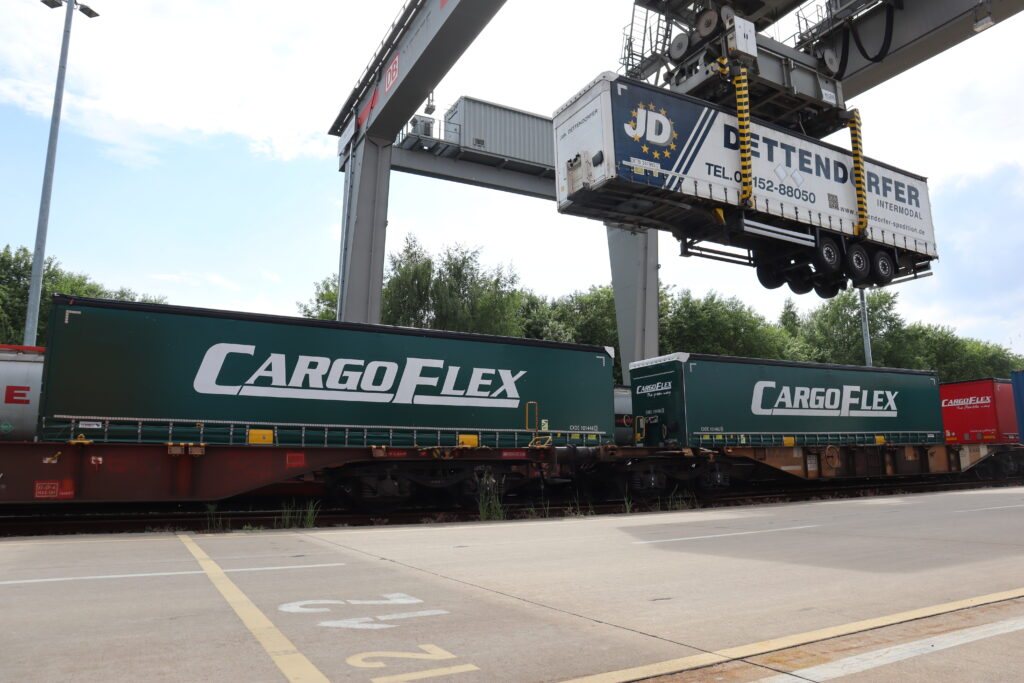
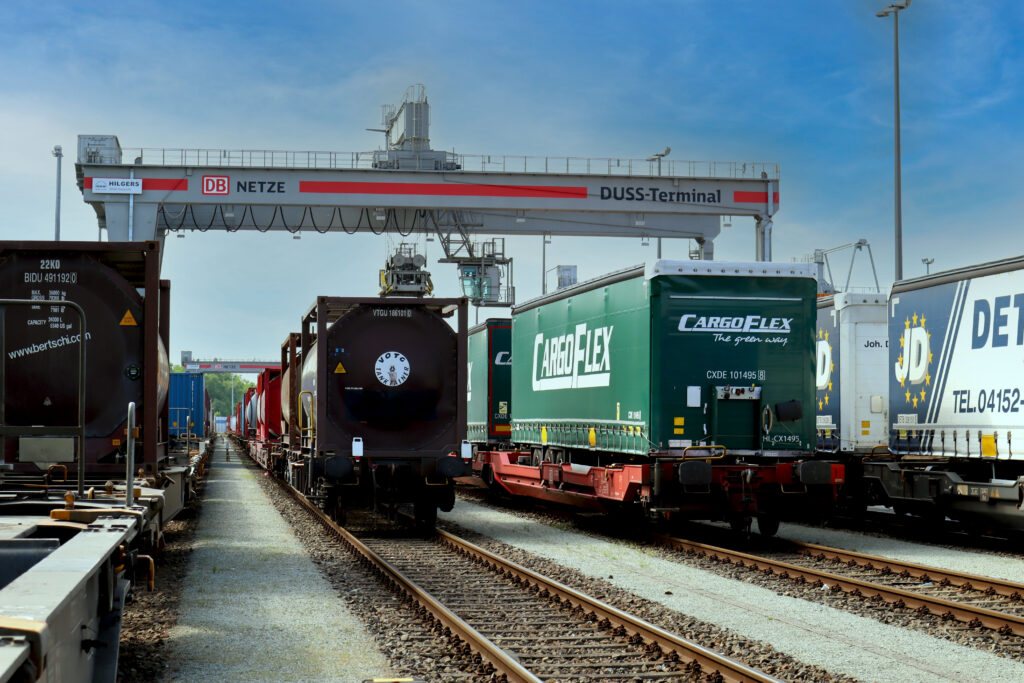
A line we use heavily. Our trailers ride the train between the Ruhr and Lithuania, straight across Poland, while the trucks stay free for the next job.
Point at a country for its distance, its CO2 and its share of the total.
April to September 2026
Road for flexibility and the first and last kilometres, rail for suitable long distances, such as Duisburg to Kaunas. Our trailers ride pocket wagons while the trucks stay free for the next job.
53 of our 69 truck tractors run on natural gas or dual fuel. Over the last six months, our natural-gas trucks emitted about a fifth less CO2 at the tailpipe per kilometre than our diesel trucks.
Between the Baltic States and Germany, our freight crosses the sea instead of driving around it.
Dispatch in Lübeck and Riga plans together directly: part loads, full loads, hazardous goods and waste.
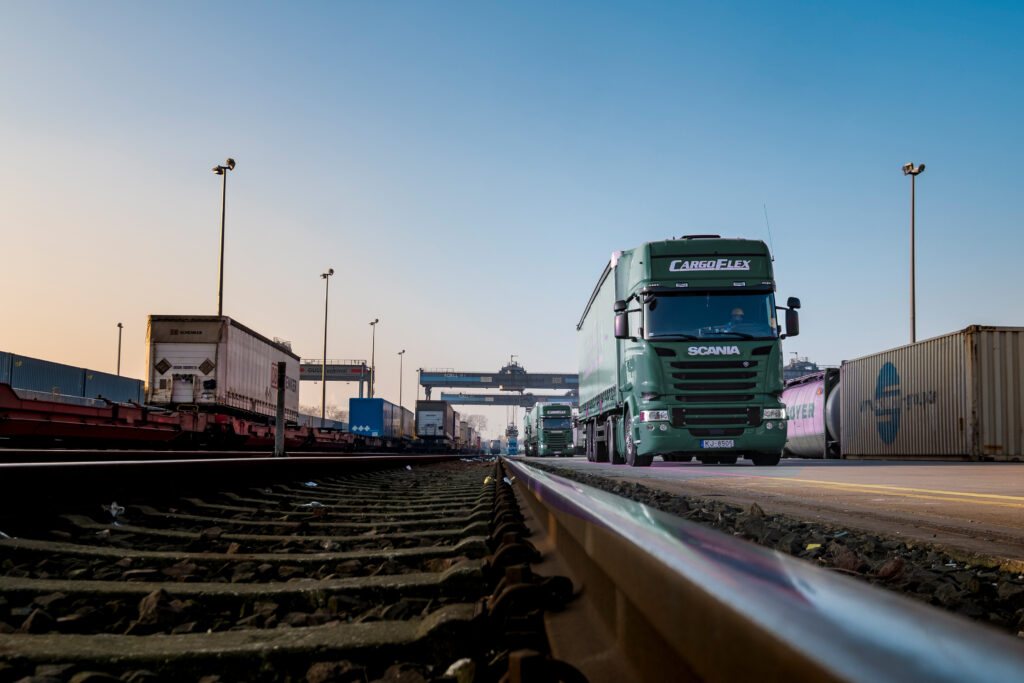
Registration data. 63 of 69 are Euro VI or Euro VI E.
Explore the fleetTailpipe CO2 per month. The solid part is measured, the outlined part modelled.
Monthly reportsRoad gives flexibility and reliable delivery times; rail is the sensible choice on suitable long distances. Combined transport uses the strengths of both.
Read on LinkedInThat it only works with compromises. Transit times, flexibility and reliability can stay where they are.
Read on LinkedInMore capacity for Europe-wide transport, on gas. The fleet page lists every truck we run, with what it drove and burned.
See them in the fleetPick a route and a load. See the distance, the modes and the CO2e, next to a diesel truck on the same trip.